
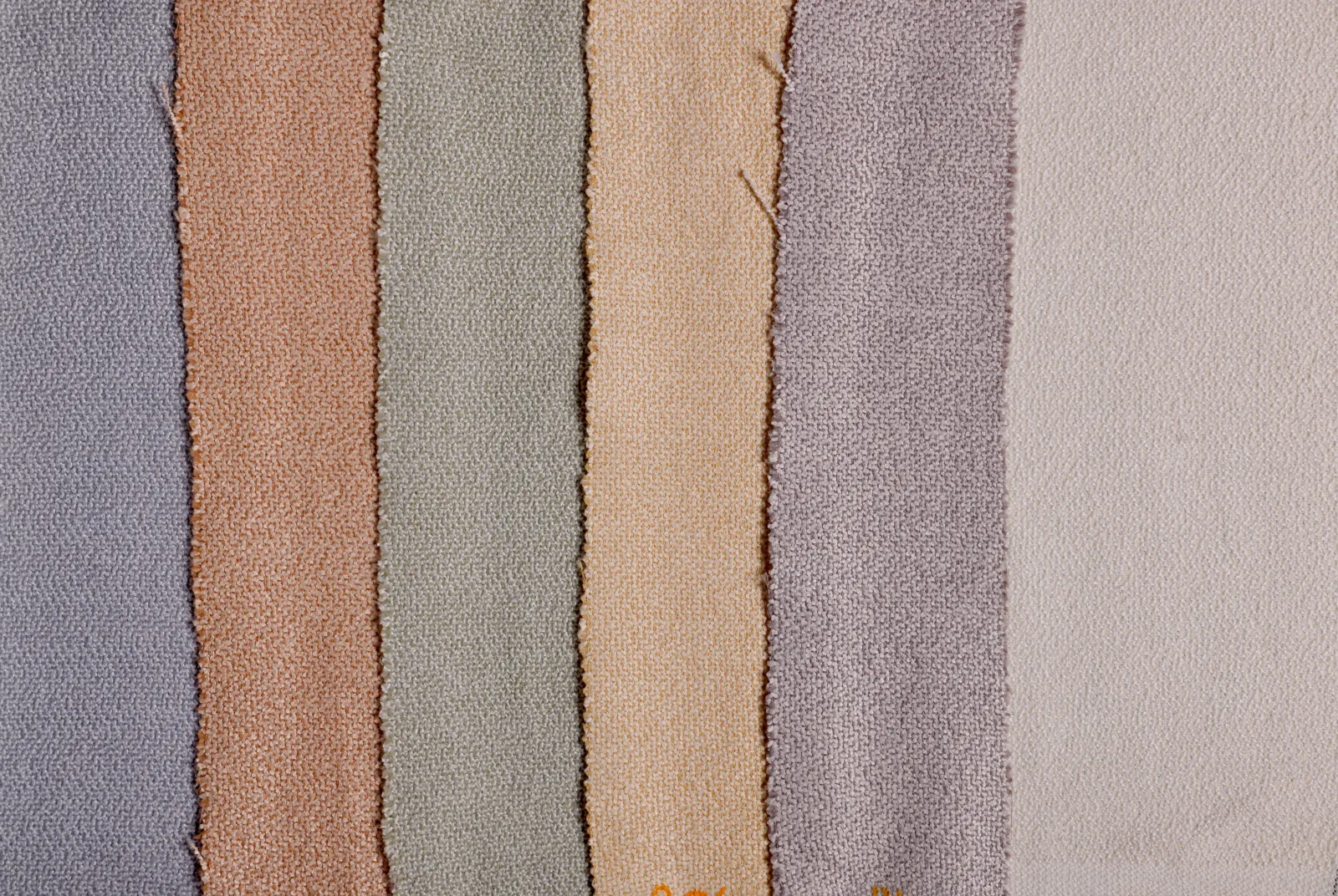
Selecting the right yarn denier for curtains is one of the most consequential decisions a textile professional makes during fabric development. The denier you choose determines drape, light filtration, durability, and the overall hand-feel of the finished curtain or drapery panel. Get it wrong and you end up with fabric that is either too stiff for elegant pleating or too flimsy for blackout applications. Get it right and your curtain fabric becomes a product that interior designers and fabric houses reorder season after season.
At Citius Textiles (MYCITIUS TEX PRIVATE LIMITED), we manufacture fancy yarns across a denier range of 550 to 9000, giving our B2B partners the flexibility to engineer curtain fabrics for every end-use scenario — from sheer voiles to heavy theatrical drapes. This guide walks you through how to match denier to application, what trade-offs to expect, and how to place sample orders for your next curtain fabric project.
Table of Contents
- What Is Yarn Denier and Why Does It Matter?
- Denier Ranges Explained for Curtain Applications
- Matching Yarn Denier to Curtain Type
- How Yarn Composition Affects Denier Performance
- Denier and Light Filtration: A Practical Framework
- Common Mistakes When Specifying Denier for Curtains
- How to Request Yarn Samples from Citius Textiles
- FAQ
What Is Yarn Denier and Why Does It Matter?
Denier is a unit of linear mass density that measures the weight in grams of 9,000 metres of yarn. A single strand of silk is approximately 1 denier. A yarn rated at 1,000 denier weighs 1,000 grams per 9,000 metres.
For curtain fabric development, denier directly influences:
- Drape and fall — Lower denier yarns produce softer, more fluid fabrics. Higher denier yarns create structured, sculptural drapes.
- Opacity and light control — Thicker yarns (higher denier) block more light per unit of fabric area.
- Weight per metre — Critical for hardware specification. Heavy drapes need robust curtain tracks and brackets.
- Durability — Higher denier yarns generally resist abrasion better, which matters in commercial hospitality environments.
- Hand-feel — The tactile quality that interior designers evaluate when selecting fabrics for residential or contract projects.
Understanding these relationships allows you to reverse-engineer your fabric specifications from the end-use requirements rather than guessing during the sampling stage.
Denier Ranges Explained for Curtain Applications
The following table summarises common denier ranges and their suitability for different curtain applications. These ranges are based on our manufacturing experience at Citius Textiles, where we produce polyester fancy yarns and cotton yarns across the full spectrum.
| Denier Range | Yarn Character | Curtain Application | Light Control |
|---|---|---|---|
| 550 – 900 | Fine, soft, fluid | Sheer curtains, voiles, net curtains | Minimal (light filtering) |
| 900 – 1,500 | Medium-fine, good drape | Semi-sheer panels, layered draperies | Moderate diffusion |
| 1,500 – 3,000 | Medium-weight, balanced | Lined curtains, standard draperies | Moderate to significant |
| 3,000 – 5,000 | Heavy, structured | Blackout curtains, thermal drapes | High |
| 5,000 – 9,000 | Very heavy, rigid | Theatrical drapes, industrial curtains, acoustic panels | Near-total to total |
These are general guidelines. Actual performance depends on weave structure, thread count, and any finishing treatments applied to the fabric.
Matching Yarn Denier to Curtain Type
Sheer Curtains and Voiles (550 – 900 Denier)
Sheer curtains demand yarns in the fine denier range. At 550 to 900 denier, the yarn produces a fabric that allows light transmission while providing a degree of daytime privacy. Fancy yarns with textural effects — such as slub or boucle profiles — add visual interest to sheers without significantly increasing opacity.
For sheer curtain development, consider our polyester fancy yarns in the lower denier range. Polyester provides UV resistance that cotton yarns cannot match in direct sunlight applications, which is a critical factor for south-facing windows in Indian and Middle Eastern markets.
Standard Draperies (1,500 – 3,000 Denier)
This is the workhorse range for residential and light commercial curtains. Yarns in this denier bracket offer a balance of drape, opacity, and durability. They pleat well in pinch-pleat, goblet, and wave-header configurations.
Fabric houses developing curtain collections for the mid-market residential segment typically specify yarns in this range. The fabric weight sits comfortably between 180 and 350 GSM depending on the weave, making it compatible with standard curtain track systems.
Blackout and Thermal Curtains (3,000 – 5,000 Denier)
Hospitality and healthcare projects frequently require blackout-grade curtains. Yarns in the 3,000 to 5,000 denier range, when woven in tight constructions, can achieve significant light blocking without relying entirely on foam-backed linings. This is increasingly important as specifiers seek more sustainable, single-layer blackout solutions.
Higher denier fancy yarns with metallic or reflective wrapping can also contribute to thermal insulation by reflecting radiant heat — a consideration for energy-efficient building projects.
Theatrical and Acoustic Drapes (5,000 – 9,000 Denier)
The heaviest denier yarns in our range serve specialised applications: stage curtains, acoustic treatment panels, and industrial partition curtains. These fabrics need to absorb sound, block all light, and withstand years of mechanical handling by rigging systems.
At Citius Textiles, our polyester yarn range extends to 9,000 denier, which is suitable for weaving fabrics exceeding 600 GSM — the typical minimum for professional theatrical drapes.
How Yarn Composition Affects Denier Performance
Denier is not the only variable. Two yarns at 1,500 denier can produce vastly different fabrics depending on their fibre composition.
Polyester Yarn
Polyester is the dominant fibre in the curtain and drapery sector globally. According to Textile Exchange’s 2023 Materials Market Report, polyester accounts for over 54% of global fibre production. For curtains specifically, polyester offers:
- Superior UV resistance and colourfastness
- Low moisture absorption (curtains dry quickly after cleaning)
- Excellent dimensional stability (no shrinkage after washing)
- Cost-effectiveness at scale
Our 100% polyester fancy yarns are engineered specifically for decorative textiles, including curtain fabrics, with texture profiles that mimic natural fibres.
Cotton Yarn
Cotton yarns bring a natural hand-feel and breathability that polyester cannot fully replicate. Cotton curtains are favoured in organic and eco-conscious interior design projects. However, cotton is more susceptible to UV degradation and mildew, and it wrinkles more readily.
For curtain applications, cotton yarns typically perform best in the 900 to 3,000 denier range, where the fabric weight provides enough body to hang well without the excessive heaviness that makes cotton drapes difficult to maintain.
Blended Yarns
Many of our B2B partners request polycotton or polyester-viscose blends that combine the durability of synthetic fibres with the tactile qualities of natural or regenerated fibres. Blending allows you to fine-tune both the denier and the hand-feel to meet precise specifications. To explore blended options, visit our fancy yarn types guide for a comprehensive overview.
Denier and Light Filtration: A Practical Framework
Light filtration is often the primary specification in curtain fabric development. Here is a practical framework for correlating denier to light performance:
Step 1: Define the light control requirement. Classify your curtain as sheer (0–30% light blocked), semi-sheer (30–60%), room-darkening (60–90%), or blackout (90–100%).
Step 2: Select the denier range from the table above. Use the denier-to-application table as your starting point.
Step 3: Adjust for weave structure. A tighter weave (higher thread count) at a given denier blocks more light. A satin weave at 2,000 denier can achieve room-darkening performance that a plain weave at the same denier cannot.
Step 4: Factor in yarn texture. Fancy yarns with loop or boucle textures scatter light differently than flat filament yarns. This can be an advantage for diffused light effects in semi-sheer applications.
Step 5: Sample and test. Always request sample cones and weave trial swatches before committing to production volumes. We provide sample shipments from our facility in India to B2B customers worldwide.
Common Mistakes When Specifying Denier for Curtains
Over our years of working with fabric houses and textile manufacturers, we have observed several recurring specification errors:
Mistake 1: Specifying Denier Without Considering Ply
A 1,500-denier single-ply yarn behaves differently from a 1,500-denier two-ply yarn. Two-ply yarns at the same total denier tend to be rounder, more uniform, and produce a smoother fabric surface. Always specify both denier and ply count.
Mistake 2: Ignoring Shrinkage in Cotton Deniers
Cotton yarns shrink 3–8% depending on the spinning method and finishing. A curtain fabric woven from cotton yarn at a specified denier will tighten after the first wash, effectively increasing the GSM and reducing the drape. Factor in shrinkage tolerances at the yarn specification stage.
Mistake 3: Over-Specifying Denier for Blackout
Not every blackout curtain needs 5,000+ denier yarn. A well-constructed fabric using 2,500 denier yarn with a tight twill weave and appropriate finishing can achieve 95%+ light blocking. Over-specifying denier increases material cost, fabric weight, and hardware requirements unnecessarily.
Mistake 4: Neglecting the Lining
Many commercial curtain products use a separate lining fabric. In these cases, the face fabric denier can be optimised for appearance and drape, while the lining handles light blocking and thermal performance. This two-layer approach often produces a better overall product at a lower total cost.
How to Request Yarn Samples from Citius Textiles
Citius Textiles supplies fancy yarns to textile manufacturers, fabric houses, and interior design firms across India and internationally. Our denier range of 550 to 9000 covers the full spectrum of curtain and drapery applications.
To get started:
- Browse our product catalogue at /products/ to identify yarn types and denier ranges relevant to your project.
- Submit a sample request through our Request a Quote page with your target denier, composition, colour preferences, and estimated annual volume.
- Receive sample cones shipped from our facility for your weaving trials.
- Scale to production once your trials confirm the yarn meets your fabric specifications.
We work with minimum order quantities that are accessible to both large mills and smaller specialist weavers.
FAQ
What denier yarn is best for sheer curtains?
For sheer curtains, yarns in the 550 to 900 denier range are ideal. This range produces lightweight, translucent fabrics that filter light while maintaining privacy during daytime. Polyester fancy yarns in this denier range offer the added benefit of UV resistance, which prevents the yellowing and degradation common in sheer curtains exposed to direct sunlight.
Can I use the same yarn denier for curtains and upholstery?
While there is overlap in the mid-range deniers (1,500 to 3,000), curtain yarns and upholstery yarns are typically optimised differently. Curtain yarns prioritise drape and light control, while upholstery yarns must withstand abrasion (measured in Martindale or Wyzenbeek cycles). A yarn that drapes beautifully in a curtain may not have the abrasion resistance needed for a sofa. Consult our team to find yarns that can serve dual purposes if needed.
How does yarn denier affect curtain fabric cost?
Higher denier yarns use more raw material per metre, so the yarn cost per kilogram is generally higher. However, the relationship is not strictly linear — manufacturing efficiency, fibre composition, and texture complexity also influence pricing. In many cases, optimising the weave construction allows you to achieve your target fabric performance at a lower denier (and therefore lower cost) than initially expected. Request a quote for specific pricing based on your requirements.
What is the difference between denier and tex in yarn measurement?
Denier and tex are both units of linear density. Denier measures the weight in grams of 9,000 metres of yarn, while tex measures the weight in grams of 1,000 metres. To convert: tex = denier / 9. The textile industry in Europe and many international standards bodies prefer tex, while denier remains common in the Indian, American, and East Asian markets. At Citius Textiles, we can provide specifications in either unit system.
Conclusion
Choosing the right yarn denier for curtains is a technical decision that directly impacts the commercial viability of your fabric product. By understanding the relationship between denier, drape, light control, and durability, you can specify yarns with confidence and reduce costly sampling iterations.
Citius Textiles manufactures premium fancy yarns from 550 to 9,000 denier, purpose-built for decorative textile applications including curtains, draperies, and soft furnishings. Whether you are developing a sheer voile collection or engineering heavy theatrical drapes, we have the yarn to match your specification.
Request a Quote to discuss your project requirements, or browse our full product range to explore available yarn types and denier options.
Download the Citius Textiles App
Stay connected with our latest yarn collections, place sample requests, and track orders on the go. Download the Citius Textiles app:
- Android: Download on Google Play
- iOS: Download on the App Store