Table of Contents
- Why Yarn Composition Matters for Textile Buyers
- The Fundamentals of Yarn Composition
- Polyester Yarn: The Workhorse of Modern Textiles
- Cotton Yarn: Natural Performance and Comfort
- Blended Yarns: Engineering the Best of Both Worlds
- Specialty and Fancy Yarns: Adding Value Through Texture
- Key Parameters to Evaluate When Sourcing Yarn
- How to Match Yarn Composition to End Use
- FAQs
- Conclusion: Source Smarter With the Right Composition Knowledge
Whether you are a textile manufacturer scaling production or an interior designer specifying fabrics for a hospitality project, understanding yarn composition is one of the most consequential decisions in your sourcing process. This yarn composition guide is written specifically for B2B buyers who need to evaluate fibre content, yarn structure, and performance characteristics before committing to a supplier or a production run.
At Citius Textiles, we manufacture and supply a wide portfolio of fancy yarns — from 100% polyester to cotton and blended constructions — and we have seen first-hand how a clear understanding of composition separates efficient procurement from costly trial-and-error. This guide breaks down what you need to know.
Why Yarn Composition Matters for Textile Buyers
Yarn composition directly determines the performance, hand-feel, cost, and durability of your finished textile product. For buyers sourcing yarns for upholstery, curtains, apparel fabrics, or technical textiles, the fibre blend dictates:
- Tensile strength and abrasion resistance — critical for upholstery and high-traffic applications.
- Drape, lustre, and hand-feel — defining factors for curtain fabrics and luxury interior textiles.
- Dyeability and colourfastness — whether the yarn accepts dyes uniformly and retains colour after washing or UV exposure.
- Thermal regulation and moisture management — important for apparel and bedding textiles.
- Cost per kilogram and minimum order viability — the commercial reality that governs every sourcing decision.
Ignoring composition details leads to rejected shipments, poor end-product performance, and eroded margins. Understanding them gives you leverage in supplier negotiations and confidence in your product development pipeline.
The Fundamentals of Yarn Composition
Before comparing specific fibre types, it helps to clarify what “composition” encompasses in a textile sourcing context.
Fibre Content
This is the raw material — polyester, cotton, viscose, nylon, acrylic, silk, wool, or a blend thereof. Fibre content is typically expressed as a percentage (e.g., 65% polyester / 35% cotton) and is subject to labelling regulations in most markets.
Yarn Construction
Construction refers to how fibres are assembled into a yarn. This includes:
- Spun yarn — short staple fibres twisted together. Gives a soft, matte finish.
- Filament yarn — continuous strands extruded from synthetic polymers. Produces a smooth, lustrous surface.
- Textured yarn — filament yarn that has been crimped, air-jet treated, or false-twisted to add bulk and stretch.
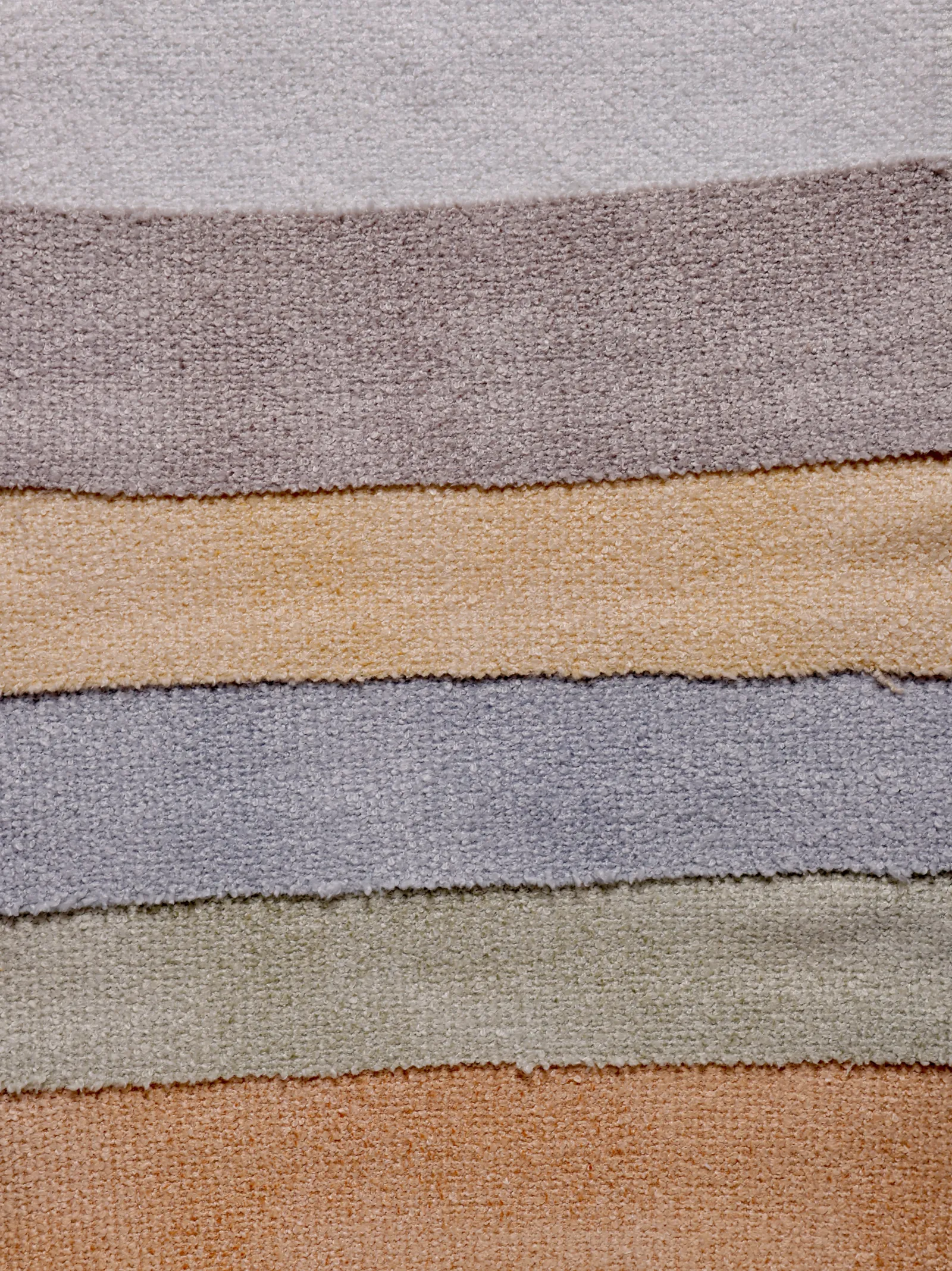
- Fancy or novelty yarn — yarns with intentional irregularities such as slubs, loops, boucle effects, or chenille piles.
Denier and Count
Yarn thickness is expressed as denier (weight in grams of 9,000 metres of yarn) for filament yarns, or as count (Ne or Nm) for spun yarns. At Citius Textiles, our polyester fancy yarns range from 550 denier to 9,000 denier, catering to everything from lightweight curtain sheers to heavy upholstery chenille.
Polyester Yarn: The Workhorse of Modern Textiles
Polyester accounts for over 50% of global fibre production, according to Textile Exchange’s Materials Market Report, and for good reason. For B2B textile buyers, polyester offers a compelling combination of performance and economics.
Advantages
- High tensile strength — resists stretching and tearing under mechanical stress.
- Excellent colourfastness — solution-dyed polyester, in particular, withstands prolonged UV exposure without fading.
- Low moisture absorption — resists mildew, making it suitable for outdoor and hospitality textiles.
- Cost efficiency — generally more affordable per kilogram than natural fibres with more consistent pricing.
- Versatility in texturing — polyester filament can be false-twisted, air-textured, or processed into chenille, boucle, and other novelty constructions.
Considerations
- Lower breathability compared to cotton or linen.
- Pilling can occur in lower-quality spun polyester constructions.
- Sustainability perception — though recycled polyester (rPET) is addressing this concern.
Explore our full range of 100% polyester fancy yarns to see the breadth of textures and deniers available for your next production run.
Cotton Yarn: Natural Performance and Comfort
Cotton remains the benchmark natural fibre for textile applications where breathability, moisture absorption, and skin comfort are priorities.
Advantages
- Superior moisture wicking — absorbs up to 27 times its own weight in water.
- Natural hand-feel — soft, warm, and comfortable against the skin.
- Biodegradable — appeals to sustainability-conscious brands and end consumers.
- Excellent dyeability — takes reactive dyes readily, producing vibrant colours.
Considerations
- Lower tensile strength than polyester — more prone to wear in high-abrasion applications.
- Susceptible to shrinkage if not pre-treated.
- Price volatility tied to agricultural commodity markets.
- Wrinkles more readily than synthetic alternatives.
For buyers working with natural fibre specifications, our 100% cotton yarn range includes options suited for both woven and knitted fabric production.
If you are weighing polyester against cotton for a specific upholstery project, our detailed comparison in Polyester vs. Cotton Yarn for Upholstery covers the performance trade-offs in depth.
Blended Yarns: Engineering the Best of Both Worlds
Blending two or more fibre types into a single yarn is one of the most effective strategies for optimising performance while managing cost.
Common Blends and Their Applications
| Blend | Typical Ratio | Key Properties | Common End Uses |
|---|---|---|---|
| Polyester/Cotton | 65/35 or 52/48 | Durability + comfort | Workwear, bedding, casual apparel |
| Polyester/Viscose | 70/30 | Strength + drape | Suiting, curtain fabrics |
| Cotton/Linen | 55/45 | Softness + texture | Home furnishing, premium apparel |
| Nylon/Polyester | Various | Abrasion resistance + resilience | Automotive textiles, outdoor furniture |
| Acrylic/Wool | 50/50 | Warmth + easy care | Knitted furnishing fabrics, throws |
Why Blends Work for B2B Buyers
Blended yarns allow you to specify a composition that hits a precise performance target without paying the full premium of a 100% natural or specialty fibre. They also offer supply chain flexibility — if one raw material faces a price spike or shortage, the blended ratio can sometimes be adjusted within acceptable tolerances.
What to Watch For
- Ensure the declared blend ratio is tested and certified. Variation beyond ±3% from the declared ratio can cause regulatory issues in export markets.
- Dyeing blends requires careful process control, as different fibres absorb dyes at different rates. Discuss dyeing compatibility with your yarn supplier before committing to a blend specification.
Specialty and Fancy Yarns: Adding Value Through Texture
For buyers in the furnishing fabric and luxury interior segments, fancy yarns offer a powerful way to differentiate products and command higher margins.
Types of Fancy Yarns
- Chenille — soft, velvety pile formed by cutting yarn loops. Ideal for upholstery and cushion fabrics.
- Boucle — looped texture that creates a curly, three-dimensional surface. Popular in contemporary furniture upholstery.
- Slub — intentional thick-and-thin irregularities that produce a rustic, artisanal appearance.
- Metallic / Lurex — yarns incorporating metallic filaments for shimmer and visual impact.
- Space-dyed — yarns dyed in multiple colours at intervals along their length, creating variegated effects in the finished fabric.
Sourcing Fancy Yarns: Key Questions
When evaluating a fancy yarn supplier, ask about:
- Denier range — Does the supplier cover the thickness you need for your fabric construction?
- Minimum order quantity (MOQ) — Fancy yarns often have higher MOQs due to machine setup requirements.
- Colour matching capability — Can the supplier match your Pantone or lab-dip standards consistently?
- Sample lead time — How quickly can you receive yarn samples for trial weaving or knitting?
At Citius Textiles, we specialise in fancy yarn manufacturing across a denier range of 550 to 9,000, with the flexibility to serve both large-volume fabric mills and smaller design studios.
Key Parameters to Evaluate When Sourcing Yarn
Beyond fibre content, professional buyers should assess the following parameters during the yarn evaluation process:
1. Evenness and Consistency
Yarn evenness (measured by Uster statistics) indicates how uniform the yarn is in terms of mass per unit length. Uneven yarn leads to defects in the finished fabric — thin spots, thick spots, and visual inconsistencies.
2. Twist Direction and Twist Per Inch (TPI)
Twist affects yarn strength, surface texture, and fabric drape. S-twist and Z-twist yarns behave differently in weaving and knitting, and selecting the wrong twist for your fabric construction can cause issues like torquing or spirality in knitted fabrics.
3. Elongation at Break
This measures how much the yarn stretches before breaking. Higher elongation is desirable for knitted fabrics and stretch applications; lower elongation suits woven constructions where dimensional stability is critical.
4. Shrinkage
Pre-shrinkage testing is essential, especially for cotton and cotton-blend yarns. Specify allowable shrinkage tolerances upfront with your supplier to avoid post-production surprises.
5. Colourfastness Ratings
Request test reports for lightfastness (ISO 105-B02), wash fastness (ISO 105-C06), and rubbing fastness (ISO 105-X12) — particularly for upholstery and curtain yarns that face sustained UV exposure and regular cleaning.
How to Match Yarn Composition to End Use
Selecting the right yarn composition starts with defining your end-use requirements clearly. Here is a practical framework:
For Upholstery Fabrics
Prioritise abrasion resistance (Martindale rating above 25,000 rubs for residential, above 40,000 for contract), pilling resistance, and colourfastness. Polyester-dominant compositions or polyester fancy yarns (chenille, boucle) are typically the strongest performers.
For Curtain and Drapery Fabrics
Drape, lustre, and lightfastness are paramount. Polyester filament yarns and polyester/viscose blends deliver excellent drape with minimal weight. Solution-dyed polyester is the gold standard for lightfastness.
For Apparel Fabrics
Comfort, breathability, and skin-feel drive the composition choice. Cotton, cotton blends, and viscose-based yarns are preferred. For performance apparel, nylon and polyester microfilament yarns offer moisture management and durability.
For Technical and Outdoor Textiles
UV resistance, water repellency, and dimensional stability are the priority. High-tenacity polyester and nylon yarns, often with protective coatings or treatments, dominate this segment.
FAQs
What does yarn composition mean in textile sourcing?
Yarn composition refers to the fibre content (e.g., polyester, cotton, viscose, or blends thereof), the yarn construction method (spun, filament, textured, or fancy), and the physical parameters (denier, twist, evenness) that collectively determine how the yarn performs in a finished textile product. For B2B buyers, understanding yarn composition is essential for specifying the right material for a given end use, negotiating effectively with suppliers, and ensuring regulatory compliance in target markets.
How do I choose between polyester and cotton yarn for my fabric production?
The choice depends on your end-use requirements. Polyester excels in durability, colourfastness, dimensional stability, and cost efficiency — making it the preferred choice for upholstery, outdoor textiles, and contract furnishing fabrics. Cotton is superior in breathability, moisture absorption, and natural hand-feel — making it ideal for apparel, bedding, and skin-contact applications. Many buyers find that blended compositions (e.g., polyester/cotton) offer an optimal balance. Consult with your yarn supplier to test samples in your specific fabric construction before committing to production volumes.
What yarn parameters should I include in my purchase specification?
A comprehensive yarn purchase specification should include: fibre composition with percentage tolerance, denier or count, number of plies, twist direction and TPI, allowable Uster evenness range, elongation at break, shrinkage tolerance, colourfastness ratings (light, wash, rub), and any finish or treatment requirements. Including these parameters in your spec sheet reduces ambiguity, minimises the risk of off-spec deliveries, and gives you clear grounds for quality claims if the delivered yarn does not conform.
Conclusion: Source Smarter With the Right Composition Knowledge
Yarn composition is not a detail to gloss over — it is the foundation of every textile product’s performance, appearance, and commercial viability. Whether you are sourcing 100% polyester chenille for a hotel refurbishment or a cotton-viscose blend for a premium apparel line, the more precisely you understand and specify composition, the better your outcomes will be.
At Citius Textiles, we work with textile manufacturers, fabric houses, and interior designers across India and internationally, supplying fancy yarns that meet exacting composition and performance standards. Our team is ready to help you identify the right yarn for your next project.
Browse Our Full Product Range | Request a Quote
Download the Citius Textiles App
Stay connected with our latest yarn collections, get real-time order updates, and request samples directly from your phone.
- Android: Download on Google Play
- iOS: Download on the App Store