
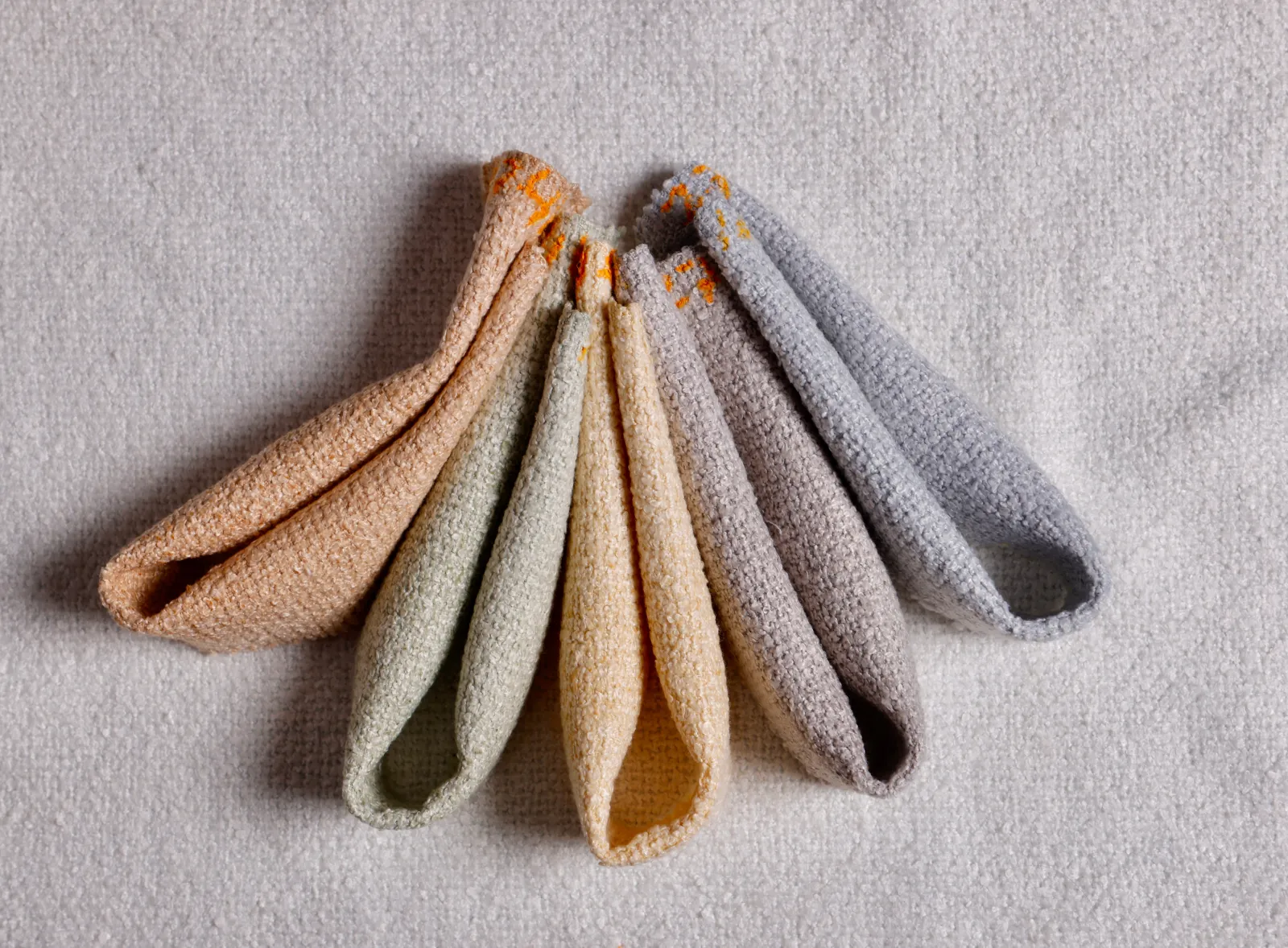
The debate over polyester vs cotton yarn for upholstery is one that textile manufacturers, fabric houses, and interior designers revisit with every new collection. Both fibres have earned their place in the upholstery sector, but they serve fundamentally different performance requirements and market segments. Choosing between them — or deciding on a blend — has direct implications for fabric durability, cost structure, end-user satisfaction, and your competitive positioning in the market.
At Citius Textiles (MYCITIUS TEX PRIVATE LIMITED), we manufacture both 100% polyester fancy yarns and 100% cotton yarns for the decorative and furnishing textile industry. This guide provides an honest, data-informed comparison to help you make the right sourcing decision for your upholstery projects.
Table of Contents
- Understanding the Core Differences
- Durability and Abrasion Resistance
- Hand-Feel and Aesthetic Quality
- Cost Analysis for B2B Buyers
- Performance in Different Upholstery Applications
- Environmental and Sustainability Considerations
- Blended Yarns: The Middle Ground
- How to Decide: A Decision Framework
- FAQ
Understanding the Core Differences
Before diving into application-specific comparisons, it is important to understand what makes polyester and cotton yarn fundamentally different at the fibre level.
Polyester is a synthetic polymer fibre (polyethylene terephthalate, or PET). It is melt-spun, meaning the polymer is melted and extruded through spinnerets to form continuous filaments. These filaments can be cut into staple fibres or used as continuous filament yarns. The molecular structure of polyester gives it inherent resistance to stretching, shrinking, and most chemicals.
Cotton is a natural cellulosic fibre harvested from the cotton plant (Gossypium). Its structure is a hollow, twisted ribbon that gives cotton its characteristic softness and moisture absorption. Cotton fibres are spun into yarn through carding, combing, and drafting processes.
These structural differences drive every performance comparison that follows.
| Property | Polyester Yarn | Cotton Yarn |
|---|---|---|
| Fibre origin | Synthetic (petroleum-based) | Natural (plant-based) |
| Moisture absorption | 0.4% | 7–8% |
| Tensile strength (dry) | High | Moderate |
| Tensile strength (wet) | Same as dry | Increases slightly |
| UV resistance | Excellent | Poor to moderate |
| Abrasion resistance | Excellent | Moderate |
| Pilling tendency | Moderate (varies by construction) | Low |
| Shrinkage | Minimal (<1%) | Moderate (3–8%) |
| Dyeability | Good (disperse dyes) | Excellent (reactive/vat dyes) |
| Cost per kg (indicative) | Lower | Higher |
| Recyclability | Mechanically and chemically recyclable | Biodegradable, compostable |
Durability and Abrasion Resistance
Upholstery fabric must withstand repeated friction from sitting, shifting, and cleaning. The industry measures abrasion resistance using the Martindale test (common in Europe and India) or the Wyzenbeek test (common in the United States).
Polyester Yarn Performance
Polyester upholstery fabrics routinely achieve 30,000 to 100,000+ Martindale cycles depending on the yarn denier, weave structure, and finishing. This makes polyester the default choice for:
- Commercial upholstery — offices, hotels, hospitals, airports
- High-traffic residential — family room sofas, dining chairs
- Outdoor upholstery — solution-dyed polyester resists UV degradation
According to the Association for Contract Textiles (ACT), the minimum recommendation for heavy-duty commercial upholstery is 30,000 double rubs (Wyzenbeek), a threshold that polyester fabrics exceed comfortably.
Our polyester fancy yarns are available in deniers from 550 to 9,000, allowing fabric developers to engineer upholstery textiles at virtually any weight and performance tier.
Cotton Yarn Performance
Cotton upholstery fabrics typically achieve 15,000 to 30,000 Martindale cycles — adequate for light-duty residential use but generally insufficient for commercial contract specifications. Cotton’s lower abrasion resistance stems from the shorter staple length of the fibres, which are more prone to surface wear over time.
That said, tightly woven cotton fabrics (such as cotton canvas or cotton sateen) can be surprisingly durable. The key is to specify a tight weave construction and, where appropriate, a soil-resistant finish.
Our 100% cotton yarns are suitable for residential upholstery and niche commercial applications where natural fibre content is a specification requirement.
Verdict on Durability
For pure abrasion resistance and long-term durability, polyester wins decisively. If your upholstery fabric will be used in commercial environments or high-traffic residential settings, polyester yarn is the pragmatic choice.
Hand-Feel and Aesthetic Quality
Durability is not the only consideration. The tactile experience of sitting on — and touching — upholstered furniture is a primary factor in consumer purchasing decisions.
The Cotton Advantage
Cotton has a warmth, softness, and natural hand-feel that polyester has historically struggled to replicate. When a consumer runs their hand across a cotton upholstery fabric, they feel:
- Breathability — Cotton absorbs and releases moisture, so it does not feel clammy in warm weather.
- Softness — The irregular surface of cotton fibres creates a naturally soft texture.
- Temperature neutrality — Cotton does not feel cold in winter or hot in summer the way some synthetic fabrics do.
These qualities make cotton the preferred choice for luxury residential upholstery, artisanal furniture, and projects where tactile quality is the primary selling point.
Polyester’s Progress
Modern polyester yarns have narrowed the hand-feel gap significantly. Microdenier polyester (below 1 denier per filament) can achieve a suede-like or even cashmere-like softness. Fancy polyester yarns with textural effects — chenille-style, boucle, slub — add tactile complexity that masks the “synthetic feel” that older polyester fabrics were known for.
At Citius Textiles, our fancy polyester yarns are specifically developed for decorative applications where aesthetics matter. The textural profiles we offer bring visual and tactile richness that positions polyester upholstery fabrics in the mid-to-premium market segment.
Verdict on Hand-Feel
For natural warmth and breathability, cotton remains superior. However, fancy polyester yarns have closed much of the gap, particularly in the visual and textural dimensions. The choice depends on how important the natural-fibre hand-feel is to your target market.
Cost Analysis for B2B Buyers
Cost is always a factor in B2B sourcing decisions. The polyester vs cotton yarn comparison has significant cost implications at scale.
Raw Material Cost
Polyester is generally 20–40% less expensive than cotton on a per-kilogram basis. This gap fluctuates with crude oil prices (affecting polyester) and agricultural yields (affecting cotton), but the structural cost advantage of polyester has held for decades.
Processing Cost
Cotton yarn requires more processing steps — ginning, carding, combing, and often mercerizing — than polyester filament yarn. These additional steps add to the manufacturing cost of cotton-based upholstery fabrics.
Maintenance and Lifecycle Cost
Polyester upholstery fabrics are generally easier and cheaper to clean. They resist staining, dry quickly, and maintain their appearance through more cleaning cycles. Cotton fabrics may require professional cleaning and are more susceptible to permanent staining, particularly from oil-based substances.
When you factor in the total lifecycle cost — including the end consumer’s maintenance burden — polyester provides a lower total cost of ownership for most upholstery applications.
Pricing Implications for Fabric Houses
| Cost Factor | Polyester Yarn | Cotton Yarn |
|---|---|---|
| Raw material (per kg) | Lower | Higher |
| Processing and spinning | Lower | Higher |
| Dyeing cost | Moderate | Moderate to higher |
| Fabric finishing | Standard | May require additional treatments |
| End-user maintenance | Low | Moderate to high |
| Total lifecycle cost | Lower | Higher |
For volume pricing on either polyester or cotton yarns, request a quote with your estimated annual consumption and target specifications.
Performance in Different Upholstery Applications
The best yarn choice depends on the specific upholstery application. Here is how polyester and cotton perform across common use cases.
Contract and Hospitality Upholstery
Winner: Polyester. Commercial environments demand fabrics that meet stringent flammability, abrasion, and cleanability standards. Polyester yarns can be engineered to meet BS 5852 (UK), CAL TB 117-2013 (US), and other fire safety standards more easily than cotton. Hotels, restaurants, and healthcare facilities overwhelmingly specify polyester-based upholstery.
Luxury Residential Furniture
Winner: Cotton or blends. High-end residential furniture — bespoke sofas, designer armchairs, heritage restoration projects — often requires natural fibre content for its aesthetic and marketing value. Cotton and cotton-blend yarns serve this market well, particularly when paired with protective finishing treatments.
Automotive Upholstery
Winner: Polyester. Automotive interiors face extreme temperature ranges, UV exposure, and abrasion. Polyester’s dimensional stability and resistance to degradation make it the standard in this sector. If you are developing yarns for automotive textile applications, explore our polyester yarn catalogue for suitable options.
Outdoor and Patio Furniture
Winner: Polyester (solution-dyed). Outdoor upholstery must resist UV, moisture, and mildew. Cotton is unsuitable for outdoor use without extensive chemical treatment. Solution-dyed polyester, where the pigment is added at the polymer stage, provides colour permanence that surface-dyed fabrics cannot match.
Antique and Restoration Upholstery
Winner: Cotton. Period-accurate restoration work often mandates natural fibres. Conservators and restoration upholsterers specify cotton for historical authenticity and compatibility with traditional construction methods.
Environmental and Sustainability Considerations
Sustainability is an increasingly important factor in yarn sourcing decisions, particularly for brands targeting the European and North American markets.
Polyester and the Environment
Polyester is petroleum-derived, and its production carries a carbon footprint. However, the environmental picture is nuanced:
- Recycled polyester (rPET) made from post-consumer PET bottles reduces dependence on virgin petroleum and diverts plastic from landfills.
- Polyester’s durability means products last longer, potentially reducing replacement frequency.
- Polyester is not biodegradable, and microfibre shedding during washing is an environmental concern, though this is less relevant for upholstery (which is rarely machine-washed) than for apparel.
Cotton and the Environment
Cotton is biodegradable and renewable, but its cultivation is water-intensive. According to the World Wildlife Fund, it takes approximately 10,000 litres of water to produce one kilogram of cotton. Organic cotton reduces pesticide use but does not significantly reduce water consumption.
The Honest Assessment
Neither fibre is unambiguously “sustainable.” The most responsible approach is to select the fibre that delivers the longest useful life for the intended application — which often means polyester for high-wear upholstery and cotton for low-wear, high-touch applications where biodegradability at end-of-life is valued.
Blended Yarns: The Middle Ground
Many of our B2B clients find that the best upholstery yarn is neither 100% polyester nor 100% cotton, but a blend that captures the strengths of both.
Common upholstery blend ratios include:
- 80/20 polyester/cotton — Prioritises durability and cost-efficiency while adding a touch of cotton softness.
- 65/35 polyester/cotton — A balanced blend used widely in mid-market residential upholstery.
- 50/50 polyester/cotton — Equal contribution from both fibres; good for fabrics that need to “feel natural” while maintaining performance.
- Polyester/viscose blends — Viscose (rayon) provides a silk-like drape and lustre that cotton cannot achieve, combined with polyester’s strength.
For a deeper exploration of yarn types, including blended fancy yarns, read our comprehensive fancy yarn types guide.
How to Decide: A Decision Framework
Use this decision framework to guide your polyester vs cotton yarn selection for upholstery projects:
Choose Polyester Yarn When:
- The fabric will be used in commercial or high-traffic environments
- Abrasion resistance exceeding 30,000 Martindale cycles is required
- Cost-efficiency at scale is a priority
- The end product will be exposed to sunlight or outdoor conditions
- Easy maintenance and stain resistance are key selling points
Choose Cotton Yarn When:
- The target market values natural fibre content and is willing to pay a premium
- The application is light-duty residential (decorative cushions, accent chairs, headboards)
- Breathability and temperature neutrality are important to the end user
- The project involves historical restoration or eco-certified interiors
- Biodegradability at end-of-life is a specification requirement
Choose a Blend When:
- You need a balance of performance and natural hand-feel
- Your fabric must meet mid-tier commercial specifications while maintaining a “natural” aesthetic
- Price sensitivity prevents using 100% cotton but the market expects more than commodity polyester
FAQ
Is polyester yarn more durable than cotton yarn for upholstery?
Yes. Polyester yarn consistently outperforms cotton in abrasion resistance testing. Polyester upholstery fabrics typically achieve 30,000 to 100,000+ Martindale cycles, while cotton fabrics usually reach 15,000 to 30,000 cycles. For commercial and high-traffic residential upholstery, polyester is the more durable option. However, durability also depends on weave construction, yarn denier, and finishing treatments — factors that can significantly boost cotton fabric performance in light-duty applications.
Can polyester yarn feel as soft as cotton for upholstery fabrics?
Modern polyester yarns, particularly microdenier and fancy textured varieties, can achieve a softness that approaches cotton. Chenille-style polyester yarns and fine-denier boucle yarns produce fabrics with excellent tactile qualities. That said, cotton retains an advantage in breathability and temperature neutrality — qualities that contribute to perceived comfort beyond just softness. At Citius Textiles, our polyester fancy yarns are designed to maximise the aesthetic and tactile appeal of synthetic fibres for decorative applications.
What is the price difference between polyester and cotton yarn for upholstery?
Polyester yarn is typically 20–40% less expensive than cotton yarn on a per-kilogram basis. The exact differential depends on market conditions, fibre quality grades, and order volume. Beyond raw material cost, polyester fabrics also tend to have lower processing, finishing, and end-user maintenance costs. For specific pricing tailored to your requirements and volumes, request a quote from our team.
Should I use blended yarn instead of 100% polyester or cotton for upholstery?
Blended yarns are often the most practical choice for mid-market upholstery fabrics. A 65/35 or 80/20 polyester/cotton blend delivers meaningful improvements in softness and breathability over 100% polyester, while maintaining significantly better durability and cost-efficiency than 100% cotton. Blends also allow you to position your fabric as “containing natural fibres” for marketing purposes. The ideal blend ratio depends on your target market, price point, and performance specifications.
Conclusion
The polyester vs cotton yarn debate does not have a single correct answer — it has a correct answer for each specific application. Polyester dominates where durability, cost-efficiency, and low maintenance are priorities. Cotton excels where natural hand-feel, breathability, and biodegradability justify a higher price point. And blends offer a versatile middle path for fabric developers who need to balance performance with market expectations.
At Citius Textiles, we manufacture both polyester and cotton fancy yarns engineered for decorative and furnishing textiles. Our team works with fabric houses and textile manufacturers to identify the right yarn specification for every upholstery project — from yarn selection through to sample delivery.
Request a Quote to start a conversation about your next upholstery fabric project, or explore our full product catalogue to see the range of yarns available.
Download the Citius Textiles App
Browse our yarn collections, request samples, and manage your orders from anywhere. Download the Citius Textiles app today:
- Android: Download on Google Play
- iOS: Download on the App Store