
Table of Contents
- Why Luxury Interior Fabric Trends Matter for B2B Buyers
- Trend 1: Textural Maximalism and Dimensional Weaves
- Trend 2: Sustainable and Traceable Yarns
- Trend 3: Warm Earth Tones and Organic Colour Palettes
- Trend 4: Performance Luxury — Durability Meets Elegance
- Trend 5: Artisanal Effects at Industrial Scale
- Trend 6: Biophilic Design Influence on Fabric Selection
- Trend 7: Metallic and Iridescent Accents
- How Yarn Suppliers Are Adapting to These Trends
- FAQs
- Conclusion: Position Your Product Line for 2025 and Beyond
The luxury interior fabric market is shifting in directions that B2B buyers — textile manufacturers, fabric houses, and interior designers — cannot afford to ignore. As we move through 2025, the luxury interior fabric trends shaping high-end residential and hospitality projects are redefining what buyers expect from their yarn and fabric suppliers. This article examines the trends driving specification decisions right now and explains what they mean for your sourcing strategy.
At Citius Textiles, we track these market movements closely because our clients — the weavers, knitters, and fabric converters who produce furnishing textiles — need yarns that align with where demand is heading, not where it has been.
Why Luxury Interior Fabric Trends Matter for B2B Buyers
Trend analysis is not just for designers and consumers. For B2B buyers in the textile supply chain, understanding luxury interior fabric trends informs critical decisions:
- Product development timelines — developing a new fabric collection takes 6 to 12 months from yarn selection to market. You need to anticipate what designers will specify next season.
- Inventory planning — stocking yarn in colours, textures, and compositions that align with market demand reduces deadstock and improves cash flow.
- Competitive positioning — fabric mills that lead on trend-forward offerings secure premium pricing and preferred-supplier status with large buyers.
- Specification confidence — interior designers sourcing fabrics for hospitality and luxury residential projects look for suppliers who understand the current design language.
With that context established, here are the seven trends defining luxury interior fabrics in 2025.
Trend 1: Textural Maximalism and Dimensional Weaves
Flat, uniform fabrics are giving way to textiles that demand to be touched. The luxury interior market in 2025 is defined by tactile richness — fabrics with visible depth, varied surface interest, and a sense of craftsmanship.
What This Means for Yarn Sourcing
This trend is a direct driver of demand for fancy yarns — particularly chenille, boucle, and loop pile constructions. Fabrics that combine multiple yarn types within a single weave (e.g., a flat ground warp with a chenille or boucle weft) are increasingly specified for:
- Upholstered headboards and statement seating in luxury hotels.
- Feature cushions and throw pillows in high-end residential interiors.
- Accent wall panels and fabric-wrapped architectural elements.
The denier range matters here. Heavier deniers (3,000 to 9,000) produce more substantial pile and deeper textures, while lighter deniers (550 to 1,500) are used for sheer drapery with subtle textural accents.
Browse our polyester fancy yarn range to explore the chenille, boucle, and textured yarn options we manufacture for this segment.
Trend 2: Sustainable and Traceable Yarns
Sustainability has moved from a marketing differentiator to a procurement requirement. In 2025, luxury interior projects — especially in hospitality and corporate fit-out — increasingly require documented sustainability credentials for specified fabrics.
Key Sustainability Drivers
- Recycled polyester (rPET) — made from post-consumer PET bottles. Reduces virgin polymer consumption while maintaining the performance characteristics of conventional polyester.
- Organic and BCI cotton — certified cotton grown without synthetic pesticides, meeting standards set by organisations like the Better Cotton Initiative.
- GRS and OEKO-TEX certification — Global Recycled Standard and OEKO-TEX Standard 100 certifications are now routinely requested in tenders for hotel textile packages.
- Traceability documentation — large hospitality groups and their procurement consultants want to trace the fibre origin through spinning, dyeing, and weaving. Supply chain transparency is no longer optional.
Implications for Buyers
If you are manufacturing furnishing fabrics for export or for large domestic hospitality projects, verify that your yarn supplier can provide the certifications your end clients require. Ask for certification copies and chain-of-custody documentation before committing to production orders.
Trend 3: Warm Earth Tones and Organic Colour Palettes
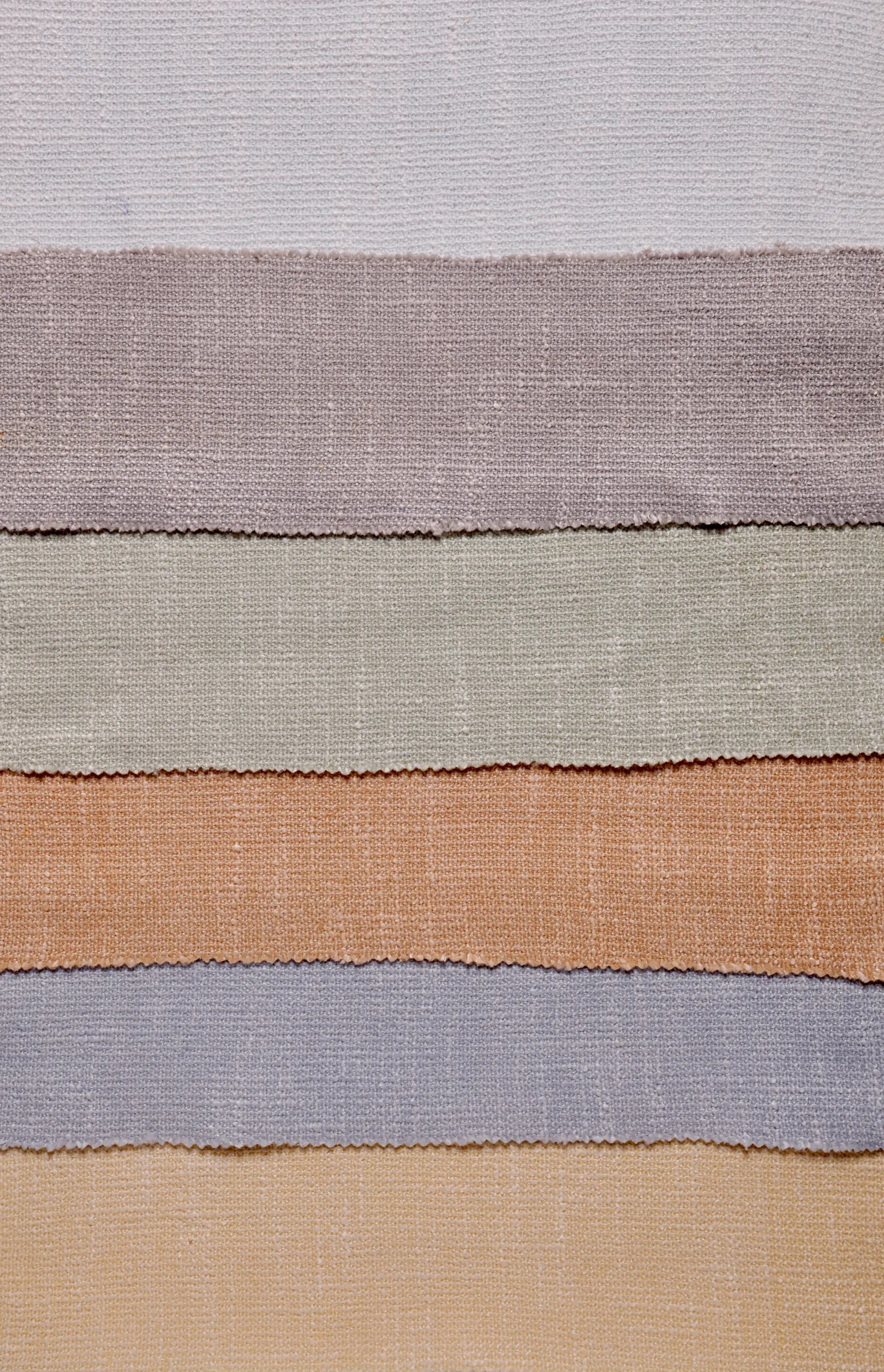
The colour direction in luxury interiors for 2025 is warm, grounded, and nature-inspired. Cool greys that dominated the 2018–2022 period have been largely replaced by:
- Terracotta and clay — rich, warm reds with brown undertones.
- Olive and sage green — muted greens that reference natural foliage.
- Camel, sand, and oat — neutral warmth without starkness.
- Deep navy and midnight blue — used as grounding accents rather than dominant colours.
- Burnished gold and bronze — metallic warmth that complements natural wood tones.
What This Means for Yarn Procurement
Colour matching precision is critical. When sourcing yarn in these muted, complex tones, small deviations in shade are highly visible — particularly in large-panel upholstery or floor-to-ceiling drapery. Work with yarn suppliers who offer lab-dip matching to your specified Pantone references and who can maintain batch-to-batch consistency across production runs.
For buyers working with Citius Textiles, our colour matching process allows you to submit reference samples or Pantone codes and receive matched yarn samples before production commitment.
Trend 4: Performance Luxury — Durability Meets Elegance
The old dichotomy between “beautiful” and “durable” is dissolving. In 2025, luxury interior fabrics are expected to perform — resisting stains, fading, abrasion, and microbial growth — without sacrificing aesthetic refinement.
Driving Forces
- Hospitality procurement standards are tightening. Major hotel groups now specify Martindale abrasion counts above 50,000 rubs for lobby and restaurant seating, combined with lightfastness ratings of 5 or above.
- Residential clients exposed to pet ownership, young children, and high-use living spaces want luxury fabrics that can handle real life.
- Outdoor-indoor living continues to expand, blurring the boundary between exterior terrace textiles and interior furnishing fabrics.
Yarn-Level Solutions
Performance luxury starts at the yarn. Key approaches include:
- Solution-dyed polyester — colour is locked into the fibre during extrusion, not applied post-spinning. This delivers superior lightfastness and wash fastness.
- High-tenacity polyester constructions — engineered for abrasion resistance without adding weight or stiffness.
- Antimicrobial treatments — applied at the yarn stage for durability through repeated laundering cycles.
For a deeper understanding of fancy yarn types suited to performance applications, see our guide on fancy yarn types.
Trend 5: Artisanal Effects at Industrial Scale
The luxury market values the look and feel of handcraft — irregular textures, organic patterns, slight imperfections that suggest human touch. But B2B buyers need to deliver these effects at commercial volumes with consistent quality.
How Yarn Technology Bridges the Gap
Modern fancy yarn manufacturing techniques can produce artisanal-looking yarns with industrial repeatability:
- Slub yarns — programmed thick-and-thin variations that simulate hand-spun irregularity.
- Space-dyed yarns — multi-colour dyeing techniques that create variegated, hand-dyed effects across long yarn lengths.
- Gimp and spiral yarns — wrapped constructions that produce tactile, three-dimensional surfaces.
The key for buyers is finding a yarn supplier whose machinery and quality control systems can deliver these effects within acceptable variation tolerances. At Citius Textiles, our manufacturing process controls ensure that the “intentional irregularity” of our fancy yarns stays within the design specification — giving you the artisanal look without the risk of uncontrolled defects.
Trend 6: Biophilic Design Influence on Fabric Selection
Biophilic design — the practice of incorporating natural elements and patterns into built environments — continues to gain momentum in luxury hospitality and wellness-focused residential projects.
Fabric Implications
- Natural fibre textures — even when using synthetic yarns for performance reasons, the visual effect should reference natural materials like raw silk, linen, jute, or unfinished wool.
- Organic patterns — woven designs inspired by leaf structures, water movement, grain patterns, and geological formations.
- Matte and semi-matte finishes — high-gloss surfaces feel incongruent with biophilic design principles. The preference is for fabrics with soft lustre or deliberately matte surfaces.
Sourcing Strategy
For B2B buyers, biophilic design demand translates to increased orders for textured polyester yarns that mimic natural fibre aesthetics — at a fraction of the cost and with superior durability. Boucle and slub-effect polyester yarns are particularly well-suited to this application, offering the organic visual language of natural fibres with the performance of engineered synthetics.
Trend 7: Metallic and Iridescent Accents
Subtle metallic accents are making a refined return to luxury interior fabrics — not the bold, disco-era metallics of previous decades, but understated shimmer woven into otherwise matte or textured grounds.
Applications
- Accent threads in drapery fabrics — a single metallic weft thread every few centimetres catches light without overwhelming the design.
- Cushion and throw fabrics — metallic-accented textiles used as decorative highlights against solid upholstery.
- Wall coverings — woven textile wall panels with embedded metallic yarns for hospitality lobbies and executive interiors.
Yarn Considerations
Metallic-effect yarns (Lurex and similar constructions) require careful handling in weaving and finishing. Ensure your yarn supplier provides detailed processing guidelines — tension settings, loom speed recommendations, and finishing temperature limits — to avoid breakage and surface distortion in the finished fabric.
Explore our complete yarn catalogue, including metallic and specialty options, on our products page.
How Yarn Suppliers Are Adapting to These Trends
The most forward-thinking yarn manufacturers are investing in capabilities that directly address these 2025 trends:
- Expanded fancy yarn ranges — more texture options, wider denier coverage, and faster colour-matching turnaround.
- Sustainability certifications — GRS, OEKO-TEX, and ISO 14001 compliance to meet procurement requirements.
- Smaller MOQs for sampling — enabling fabric designers to trial new yarn constructions without committing to full production quantities.
- Digital colour libraries — allowing buyers to preview yarn colours on screen before requesting physical samples, accelerating the development cycle.
- Technical consultation — advising fabric mills on optimal yarn selection for specific weave structures and end-use performance targets.
At Citius Textiles, we are investing across all of these areas because we understand that our success is directly linked to our clients’ ability to respond to market trends quickly and profitably.
FAQs
What are the biggest luxury interior fabric trends for 2025?
The dominant luxury interior fabric trends for 2025 include textural maximalism with dimensional weaves using chenille and boucle yarns, sustainable and traceable yarn sourcing with documented certifications, warm earth-tone colour palettes replacing cool greys, performance luxury that combines durability with aesthetic refinement, artisanal effects achieved at industrial scale through fancy yarn technology, biophilic design influences driving demand for natural-looking textures, and subtle metallic accents woven into matte ground fabrics. For B2B textile buyers, these trends translate into specific yarn sourcing requirements around fibre type, texture, colour matching, and certification.
How should textile manufacturers prepare their product lines for these trends?
Start by reviewing your current yarn inventory and fabric collection against the trends outlined above. Identify gaps — particularly in textured yarn offerings, earth-tone colour options, and sustainability documentation. Engage with your yarn suppliers early in the development cycle to source samples of chenille, boucle, slub, and metallic-effect yarns. Test these in your weaving or knitting setup before committing to production volumes. Build sustainability credentials into your supply chain by requesting GRS or OEKO-TEX certified yarns. Finally, update your sample books and digital catalogues to reflect the 2025 aesthetic direction so that your sales team can present trend-aligned options to designers and specifiers.
Why is yarn selection so important for achieving luxury fabric trends?
Yarn is the foundational raw material that determines a fabric’s texture, drape, lustre, colour depth, and durability. In luxury interior applications, where tactile quality and visual sophistication are non-negotiable, the yarn choice accounts for the majority of the finished fabric’s character. A boucle yarn produces a fundamentally different aesthetic than a flat filament yarn, regardless of the weave structure applied. Similarly, the difference between a stock-dyed and a solution-dyed polyester yarn is invisible in a sample but critical over years of UV exposure in a south-facing hotel suite. Selecting the right yarn — from a supplier with the quality control to deliver consistently — is the single most impactful decision a fabric manufacturer makes.
Conclusion: Position Your Product Line for 2025 and Beyond
The luxury interior fabric market rewards suppliers who anticipate trends and deliver products that meet the exacting standards of designers, specifiers, and hospitality procurement teams. The trends outlined in this article — from textural maximalism to performance luxury to sustainability mandates — all trace back to a common requirement: the right yarn, from the right supplier, delivered with the right quality and documentation.
Citius Textiles manufactures fancy yarns that align with every trend discussed here. Whether you need high-denier chenille for dimensional upholstery, solution-dyed polyester for performance drapery, or space-dyed boucle for artisanal-effect cushion fabrics, our team is equipped to support your product development from sample to full production.
Browse Our Full Product Range | Request a Quote
Download the Citius Textiles App
Stay connected with our latest yarn collections, get real-time order updates, and request samples directly from your phone.
- Android: Download on Google Play
- iOS: Download on the App Store